Become a founder stack engineer.
Our 8‑week residency program is where a select group of engineers and founders deploy AI end to end for real customers under senior mentorship. Ship outcomes, not just code.
The last mile is a human problem.
95% of GenAI pilots fail to deliver due to flawed enterprise integration, not model quality. The entire industry is bottlenecked on the last mile.
Closing that gap takes judgment to scope under ambiguity, taste to make the hard architectural calls, and agency to ship through real organizational friction. These are the skills that matter in the AI era. They’re also the skills that make founders.
No course can teach them. You only get them by iterating with real customers on real stakes, and most people never get that chance.
So we built a place for it.
Founder stack engineer.
- Customer empathy and jobs‑to‑be‑done thinking.
- Scoping under ambiguity.
- Product judgment, deciding what not to build.
- AI‑native execution: spec, direct, review, verify.
- Architecture judgment across unfamiliar stacks.
- Eval and harness engineering for LLM systems.
- Edge case paranoia.
- Stakeholder navigation across competing priorities.
- Demo and narrative that make change land.
FDE work as training ground.
Forward deployed engineering (FDE) is Palantir’s name for embedding with customers to ship through the last mile. It uniquely forces the full founder stack at once, and lets you sit with real customer pain to find problems worth solving. Not through brainstorms.
That’s why Palantir alumni have founded more than a dozen unicorns (Anduril, Amplitude, Handshake, Kalshi, ElevenLabs) and 100+ venture-backed companies, #3 per-alumnus rate in US tech, behind only DeepMind and OpenAI.
Realyz took that playbook public.
8 weeks, full‑time, remote.
The goal is to deploy AI into a real operating business’s production for a measurable outcome in 8 weeks. Customers typically have a few hundred to a couple thousand employees, across software, finance, insurance, distribution, industrials, and B2B services.
They come to us with a metric the leadership wants to improve, like handling routine support tickets without a human, turning around contract reviews in minutes, qualifying sales leads automatically, or collecting cash faster. Sometimes the outcome is already scoped; sometimes finding it is your first job.
Each cohort has 9 residents in teams of 3. The three teams run in parallel, each with one customer. One senior ex‑Palantir FDE leads the whole cohort. Residents are full‑time with a $4,000/month stipend.
Week 0
Week 0 is a 5‑day remote sprint. You run a compressed end‑to‑end deployment on a synthetic brief modeled on your real customer’s stack and situation, with us role‑playing the customer. Scope, build, and demo as a team. By the end of the week, you’ve failed safely and know where the bar is.
Cohort kickoff
The cohort opens with a 3‑day, in‑person kickoff in NYC. It gives you the opportunity to get to know each other, your seniors, and the Realyz team.
The work
Remote, with onsite trips to customers as needed. You own the customer relationship from Day 1. Agents write the majority of code.
Roughly 80% of your hours go to your team’s deployment. You start with problem discovery and locking acceptance criteria, build an end‑to‑end system behind a kill switch, harden it through observability, failure modes, and customer testing, and deploy to production with a runbook for the customer. Throughout, you’re in direct, frequent contact with the customer.
The other 20% is operations work on one of our live customer deployments: tuning drift, upgrading evals, fixing edge cases, and fielding what breaks. It’s where you see how an AI system actually behaves once it leaves the demo.
Support
Your senior hosts weekly group office hours where residents from all teams share what’s working, what isn’t, and what they’re learning. Each team also gets one‑on‑one office hours as often as they want. The senior leads early customer calls and steps back as you run the engagement.
Feedback
Feedback is how learning happens in the residency. Just as it makes LLMs and agents better, it makes humans better too. We take it seriously.
You get it from your senior, the customer, and your teammates through everyday work. The culture is blameless: we look for problems in the process, not the person. Learning happens in the open and weekly group office hours pull all teams together. Two formal checkpoints anchor the residency: a mid‑residency review that recalibrates if your team is off track, and an end‑of‑cohort individual performance review.
We built software that pulls signal from your code, calls, and actions, identifies deeper patterns, and surfaces what matters when it matters.
The senior bench.

Anjor Kanekar
Seven years at Palantir as a Forward Deployed Engineer and hiring manager, building deployment teams across commercial and UK operations. Then Engineering Lead at Protocol Labs and Head of Applied AI at Radiant AI.
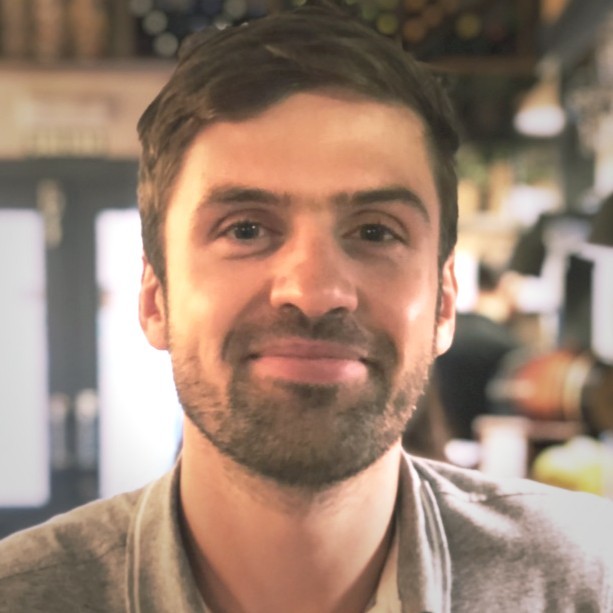
Piotr Kraus
Nine years at Palantir, going from Forward Deployed Engineer to leading Financial Services Engineering across EMEA. Now Head of Solution Engineering at RelationalAI, running enterprise deployments on Snowflake.
For builders who...
- Want to sit with real customer pain instead of spending years building for the wrong problem.
- Are stuck in vibe coding hell, churning out demos and MVPs that don’t stick, and ready to ship outcomes, not just code.
- Need a real proof point for when they raise: a paying customer, a system in production, a number they moved.
- Want to be in a room with builders who already ship AI‑native, before the field moves on.
Cohort 1 starts Summer 2026.
Nine seats. Hand-recruited from a founder network.
If you think we missed you, let us know. Tell us about something impressive you’ve built or achieved, and what you learned doing it.
No resume. No cover letter.
Got questions?